Interview with Lesley-Anne O’Brien by Paul Wade
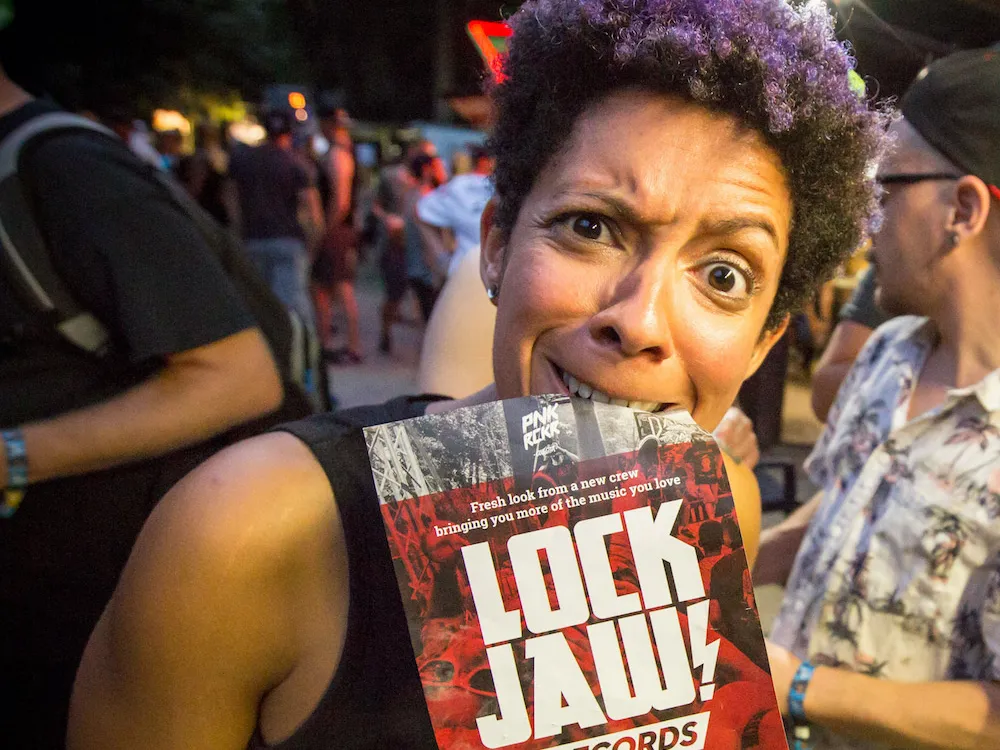
LockJaw Records are one of the stalwarts of the DIY Punk scene in the UK, having had some of the greats, from bands like Darko, Sunliner, drones, and belvedere, as well as NSG alumni Burnt Tapes and this month’s RATSALAD. We sat down with Lesley-Anne from LockJaw to chat about the label.
Lockjaw is a label rooted in DIY. How long has it been going and how did it get started?
The label’s got an amazing history (which you can search for online). It was started nearly 30 years ago by the brothers in the band Tribute to Nothing. It’s changed hands a number of times since then, until my ex-colleague Rob, who plays in Darko, picked it up in 2012. I joined a couple of years later, and picked up the helm since. 30 years for a DIY label is amazing, and I’m sure we’ll find some ways to celebrate! The label has always been DIY, but really, I would like to say DIT (Do It Together), because this wouldn’t happen without the help of other people and services in the scene. It’s not just about one label, one band, or one person. It’s about all the collective creatives, business heads, fans and enthusiasts who keep this scene moving.
How many people are involved in the day to day running of the label and what do their roles consist of?
At the moment, we have a core team of four people from around the world!:
Greg Banks, who’s based in Florida, is our guy who keeps our voice loud online, because if I was in charge, it would turn into a whisper! He’s the boss on all the socials, marketing and advertising.
In the north, we have Jake McAllister, who also plays in Sunliner & Heavyset, who’s looking after our newsletter. Whenever we have something important to say, we’ll blast out an email. It’s one of the strongest methods of communication at the moment.
Closer to home, I have Simon White, who helps out with our mail order, eCommerce, general co-ordination support and he provide plenty of shits and giggles in our office.
Then there’s me, in London. I’m in charge of keeping the business moving and the music flowing: admin, releases, A&R, admin, accounts, distribution, admin, manufacturing, sync, legal, and everything else… and more admin.
We also have a number of people behind the scenes working on projects on a ad hoc basis, such as Will Duff, Jack Courtez, Jodie Burge, Tom Aylott and more. I’ve got to give them their flowers. We share an office with Dave McManus from Everything Sucks Music. Sharing the space gives opportunity to share ideas, support, lunch and coffees.
We’ll properly introduce everyone who’s involved to our community once more projects have been put in place. The label is going through lots of internal changes, which will give us a better scope to serve the bands and fans. I’m looking forward to dropping these projects that have been a long time coming!
What is the ethos of the label?
Besides kick ass music? I’m glad you’ve asked… Over the years we’ve crafted a handful of core values that help guide us through our projects, considerations, and decisions as a label. Our values are: Collaboration, Social responsibility, Inclusivity, Activism, Artist support and development. They’re mainly informed by the scene, DIY culture, and just wanting to make our communities a better place. When we came up with these, it felt like a wishy-washy thing to do, but when you do find yourself struggling to make a decision, it’s easy just to reflect back on the values to put you the right direction, or at least cut out the fluff.
What challenges does a DIY label face in today’s music landscape?
I think the same struggles that they’ve always faced: finding resources to invest in and put out new bands. Burnout. And a changing social/musical landscape. Although, recently all of this has become more difficult in the face of rising costs and a saturated music market. There’s so much noise out there, and I’m sure anybody who runs a business or is in the music space knows how difficult that is to cut through. It happens if you are with a small DIY label or one of the majors! With all the tools, services, platforms, and ‘apparently’ intelligent computers at our fingertips, does a DIY label still hold any relevance? I don’t know? What I do know is that these challenges offer opportunities for really cool creative ideas and innovations that can inspire a wave of people and switch up the way we do things. Don’t like something? Change it! I’m enjoying seeing things like the co-operative music marketplace, Subvert, take shape. They’re using all the modern tech and tools we have at our disposal to make something that would have been administratively painful in the past, into a utopian reality.
A lot of bands we speak to dont really know the best and most effective way of putting out music anymore. More and more bands are just putting out songs as and when they are recorded. What’s your stance on singles vs. EPs vs. albums for bands right now?
There is no right answer, or one size fits all here. It’s whatever works best for you and your audience. For some bands and their listeners, singles might be better to serve because of the band’s access to production, or just simply because their audience is used to hearing single after single and growing on the hype around the individual tracks. There are other bands whose work is better digested by their fans as larger bodies of work. A better listener experience; it works out better thematically. And it’s cheaper for production to hire out a studio for days or weeks to create a sonically cohesive album. For us as a label, it makes sense for us to provide an album so we can make some sweet vinyl for people to enjoy. We’ll preview as many singles as we can put out before the album is released to help the band grow interest in the album and have something to talk about. It’s a lot of fun taking this approach, as you can build ‘little worlds’ around a single for fans to enjoy.
For those people who dont play in bands and have never dealt with labels explain to us how it all works? Which costs do the label typically front, and which do artists cover?
Have you got a beverage to hand? Great, take a seat. I’ll try and give you record label 101, as briefly as I can. Once again, there’s no one-size-fits-all. To start everything off, a sound recording (album/EP/single) would be made by a band. Note that whoever has paid for it would keep most of the rights to it. The ownership is important.
Most DIY setups: a band will come to a label with everything mixed and mastered, ready to go. The label might help out with some production costs, and then they would work out a deal for how they are going to share the profits and costs. The label will ‘release the record’, which will mean looking after all of the administration, sales, marketing, distribution and all the other things that goes into a release plan, so that the band can focus on playing shows, and putting the record to their fans and connecting/growing a fanbase.
The label will most certainly front all, if not the majority, of the production costs and organise the manufacturing of the product (CD, vinyl, cassette tapes) and the uploading of the tracks to your favourite digital services. The costs for any marketing extras, such as PR, plugging and videos, can be shared or fronted by either label/band. So it’s all really up to the label and band to agree how they want to roll the release out and how to organise it. You can get creative here and lean in on the advantages of your team.
Now, remember what I said about ownership? Traditionally the owner of the sound recording will determine who will be ‘owed’ money. If the label paid, the label will own the record, and the band pay back the label. And vice versa, if the band have paid for the record, the label owes them. Some labels and bands work on a partnership basis and a 50/50. You can make up your own rules, as long as everyone agrees the details beforehand. Now, throw in labels from all around the world into this mix, and you’ve got yourself a multi-label territory release and a larger team to work with. At Lockjaw, it all depends on what the band and release wants and needs. We work out our objectives and we’ll work backwards from there to come to an agreement with the artist.
The PR game can feel pretty overwhelming these days and it’s pretty hard to gauge the impact of a blog review compared to say getting on a spotify playlist. How do you approach this world when you have an upcoming release and what advice would you have for bands about the best ways of getting yourself out there?
There are plenty of wins that you can get online, but what I ask each band to do is get clear three or five goals and make them SMART goals, so your not getting lost in details. Certainly reach out to blogs and look at getting on independent playlists, but at the end of the day, if you’re looking to grow your attendance at live shows or hit a specific sales target, there will be more effective ways for you to hit those goals, than focusing on blogs and playlists. If you’re trying to bump up your streaming numbers, then certainly getting on more playlists to help the algorithm find your audience, would be the best move.
I see some artists are leveraging text/SMS marketing and creating WhatsApp groups. It’s not for everyone, but it’s something that can be quite effective, especially if you’re using it creatively to make a fun or engaging space for your fans.
It’s easier to rely on other people’s platforms and audiences, but the best thing you can do is to grow your own platform/audience. Funnelling your listeners over to your social channels, and then onto your newsletter mailing list is a great online strategy that will move the needle over time. It’s not easy, but the stats are clear, that when you email your fanbase they will pay more attention and respond, compared to social media. I see it time and time again, with our own newsletter. Nothing beats direct contact.
Yes, promoting yourself online through other people’s platforms is really difficult. One artist doing well on a particular playlist or blog doesn’t guarantee that the other artist will. And it also doesn’t even guarantee that a different song by the same artist will do well. It’s very hit-or-miss, so I’d advise not to put all of your eggs in one basket. Try and play to your strengths, but build up the skills in areas that you are weaker with.
How do you decide which bands and records you want to put out?
There are a few things that we consider. How the band plays live is very important. I think that if someone sees a Lockjaw band live, that they should have their socks knocked off! Does it fit the Lockjaw sound? Is the band doing something that is making us tighten our jaw with their shreds, songwriting or production? Does the band cultivate their own fanbase? Do they know how to connect to an audience live or online? Timing is also important. We are a small outfit and have to weigh up what’s possible for our schedule and budget.
And lastly, can we add anything to the release campaign or band’s career? We are an extention of the band’s team. But in some circumstances it might bloat the campaign. Some bands can benefit with a self-release. A label doesn’t necessarily guarantee that you’ll have success. If you can do it all of yourself, you can also reap all of the rewards for yourself and cut out the middle man.
This month we are putting out the new LP from RATSALAD. How did you discover that band, what do you love about them and how psyched were you that they wanted to be a part of Lockjaw?
Pete from Pee Records in Australia got in touch with us to see if we wanted to put out their debut album, Bent Trees & Swanny Deez, and we didn’t hesitate to say ‘yes’. What a banger! They’re such a great band, and this was cemented when I finally got to see them live on their EU tour. They played at my local venue on the hottest day of the year, and I thought I was having a fever dream when I saw Jaz do a cartwheel while holding her bass! So when the new album was ready, we were stoked to be asked to be a part of it. This new album is a fun progression on various levels, giving you a bit more insight into the RATSALAD lore and the kind of party and riffs they bring. If they’re playing near you, go and bring a friend.
What upcoming releases have you got planned for the year and what can you tell us about them?
Lockjaw followers may have noticed that Lockjaw Records has been relatively quiet lately. It’s been for a good reason. I’ve hinted at the projects we’re working on and on our 30th anniversary that’s coming up… So all I can let slip at this moment is that we’ve got a few amazing releases that we’re cooking up. You just have to sign up for our newsletter or follow us on socials to hear about it first.